 Jeffrey Glassman Injury Lawyers Home

$516,412.60 Settlement for Pedestrian Injured at Massachusetts Auto Auction
Case Result Snapshot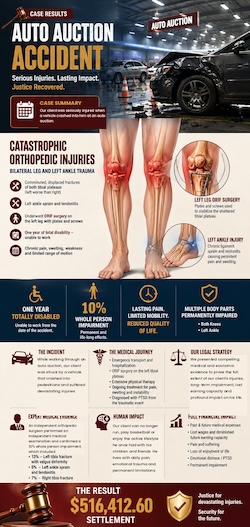 Case Overview Related Resources
Settlement Amount: $516,412.60
Attorney: J. Morgan Hargrove
Practice Area: Premises Liability; Pedestrian Injury
Jurisdiction: Massachusetts
Incident Location: Billerica
What Happened: Pedestrian struck by vehicle at a Massachusetts automobile auction
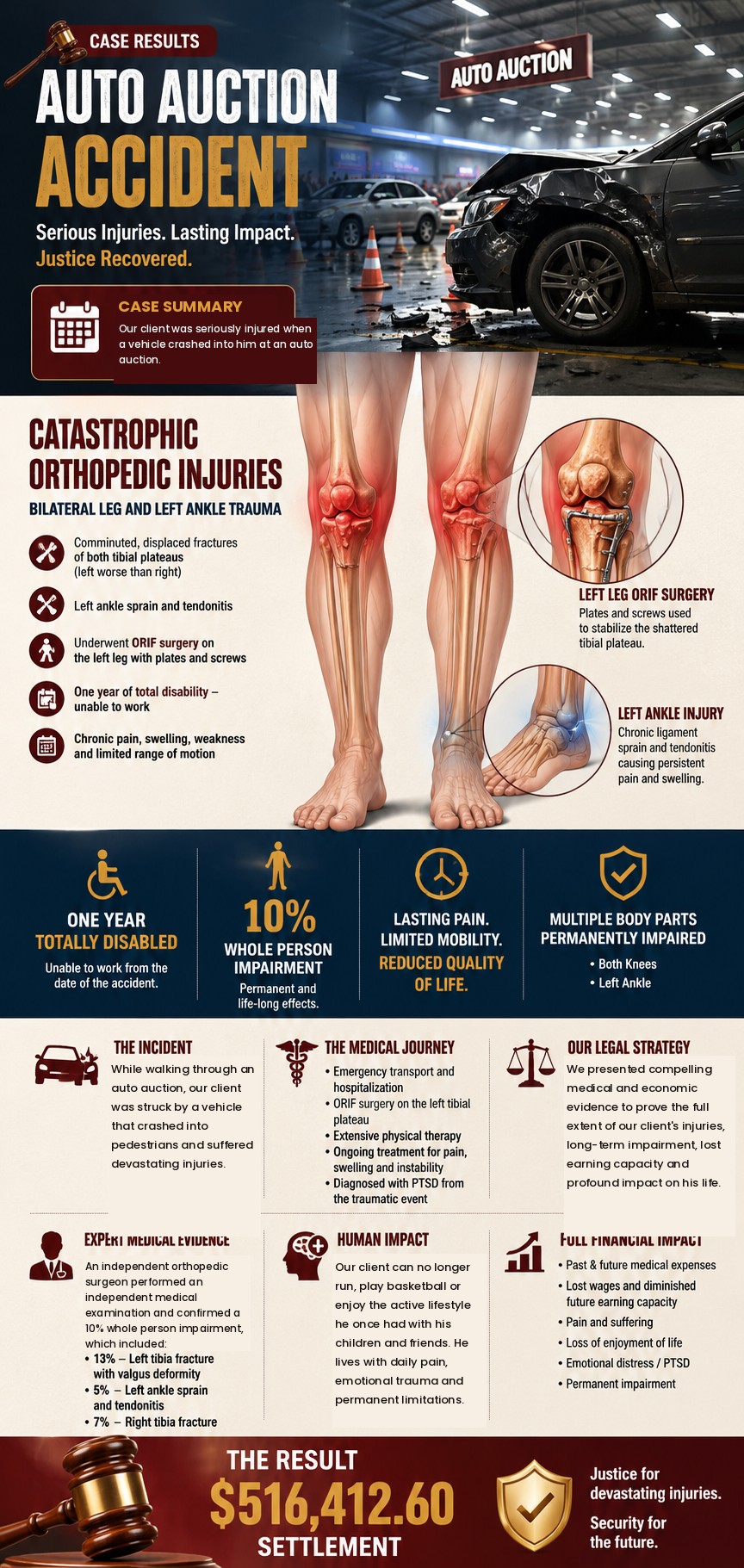
Injury Type: Bilateral leg fractures requiring surgery, permanent orthopedic impairment, chronic pain, and mobility limitations
 Case Overview
 A routine visit to an automobile auction changed our client's life in a matter of seconds. After being struck by a vehicle operating within the auction area, he sustained serious orthopedic injuries requiring surgery, prolonged rehabilitation, and years of ongoing medical care. Although the fractures healed, the lasting effects of the injuries became the central issue in the case.
The matter ultimately resolved for $516,412.60. More importantly, the case illustrates how objective medical evidence, expert analysis, and careful development of damages can establish the true value of a serious orthopedic injury claim.
Understanding the Challenge The IncidentOur client was lawfully present within an active Massachusetts automobile auction when a vehicle unexpectedly accelerated through the auction lane and struck him. The force of the collision caused significant injuries to both lower extremities, requiring emergency hospitalization and orthopedic surgery.
The Medical IssuesThe client sustained multiple fractures to both legs, requiring surgical fixation of one leg followed by extensive rehabilitation. Although the fractures healed, he continued to experience chronic pain, permanent orthopedic impairment, altered gait, and psychological injuries associated with the traumatic event. Independent orthopedic evaluation also concluded that he faces an increased likelihood of future knee replacement surgery due to post-traumatic degenerative changes.
Diagnostic TestingThe injuries and their long-term effects were documented through emergency imaging studies, orthopedic examinations, operative reports, rehabilitation records, and an independent orthopedic medical evaluation. Those objective findings established that the client's functional limitations extended well beyond the initial healing process.
Recovery and Long-Term ImpactTreatment included emergency hospitalization, orthopedic surgery, inpatient rehabilitation, skilled nursing care, outpatient physical therapy, and ongoing orthopedic follow-up. Despite significant recovery, the client did not return to his pre-incident level of functioning. He continues to experience chronic pain, permanent mobility limitations, diminished earning capacity, and reduced ability to participate in many of the activities he enjoyed before the incident.
How We Built the Case The Defense PositionThe primary dispute concerned damages rather than the occurrence of the incident. The defense argued that because the fractures had healed, the objective medical evidence did not support the degree of permanent impairment, future medical treatment, or economic loss being claimed.
The Expert AnalysisThe case relied upon treating orthopedic physicians, an independent orthopedic medical examiner, and comprehensive review of the client's medical records, diagnostic imaging, operative reports, and rehabilitation records. Permanent impairment was evaluated using the American Medical Association's Guides to the Evaluation of Permanent Impairment (AMA Guides), providing an objective methodology for assessing long-term functional loss and future orthopedic treatment.
Legal, Medical & Industry AuthoritiesThe case was supported by recognized legal and medical standards, including:
- Massachusetts common law negligence principles governing the duty of reasonable care owed to individuals lawfully present on commercial premises.
- American Medical Association's Guides to the Evaluation of Permanent Impairment (AMA Guides) to objectively evaluate permanent impairment and future orthopedic limitations.
- ICD-10 diagnostic classifications, providing standardized medical documentation throughout the client's treatment.
- DSM-5-TR diagnostic criteria, where applicable, in evaluating the client's psychological injuries following the traumatic incident.
- Accepted orthopedic standards of care addressing fracture healing, permanent impairment, post-traumatic arthritis, and future orthopedic treatment.
The case was presented through objective medical evidence rather than subjective complaints alone. Diagnostic imaging, operative reports, rehabilitation records, and independent orthopedic evaluation demonstrated that although the fractures had healed, the client remained permanently impaired. The evidence also established the likelihood of future knee replacement surgery and continuing orthopedic limitations, providing objective support for the damages claimed.
Why This Case MattersInsurance companies frequently argue that a person has fully recovered once fractures have healed or surgery has been completed. That is not always the case.
This matter demonstrates that permanent impairment, future medical treatment, diminished earning capacity, and chronic pain may continue long after the initial injury has healed. Establishing those damages often requires objective medical evidence, qualified expert testimony, and accepted medical methodology rather than subjective complaints alone.
Every case is different, but individuals facing similar orthopedic injuries should understand that the long-term effects of an accident may not become fully apparent until months or even years after the initial trauma.
The ResultThe case resolved for $516,412.60.
The settlement reflected the client's permanent orthopedic injuries, future medical needs, diminished earning capacity, and long-term functional limitations. The resolution was supported by objective medical evidence, independent orthopedic evaluation, and accepted impairment methodology demonstrating that the client's injuries continued to affect nearly every aspect of his daily life.
Frequently Asked QuestionsMy Fractures Healed, but I Still Have Pain and Mobility Problems. Can I Still Have a Claim?
Yes. Healing of a fracture does not necessarily eliminate permanent impairment, chronic pain, future medical treatment, or diminished earning capacity. Those issues are evaluated independently when determining damages.
Can Future Knee Replacement Surgery Be Considered as Part of My Damages?
Potentially. If qualified medical experts conclude that future orthopedic treatment is reasonably likely because of the injuries sustained in the accident, those future medical expenses may be recoverable.
Why Is an Independent Orthopedic Evaluation Important?
Independent orthopedic evaluations provide objective opinions regarding permanent impairment, long-term functional limitations, prognosis, and future medical needs. Those findings often become important evidence when evaluating the value of a serious injury claim.
- Massachusetts Premises Liability
- Pedestrian Accident Claims
- Catastrophic Injury Cases
- Orthopedic Injury Claims
- Permanent Impairment Evaluations
- Future Medical Expenses in Personal Injury Cases
Serious orthopedic injuries often involve far more than emergency treatment or surgery. Long-term medical care, permanent impairment, future treatment, and diminished earning capacity can substantially affect the value of a claim.
If you or a loved one has suffered serious injuries because of someone else's negligence, the attorneys at Jeffrey Glassman Injury Lawyers are available to evaluate your case and explain your legal options during a free consultation.


